
2026-11-16T05:35:45.433+00:00
Lipo and BBL Recovery Week by Week: Your First 30 Days in New York
Dr. Ronald Espinoza · 6 min read
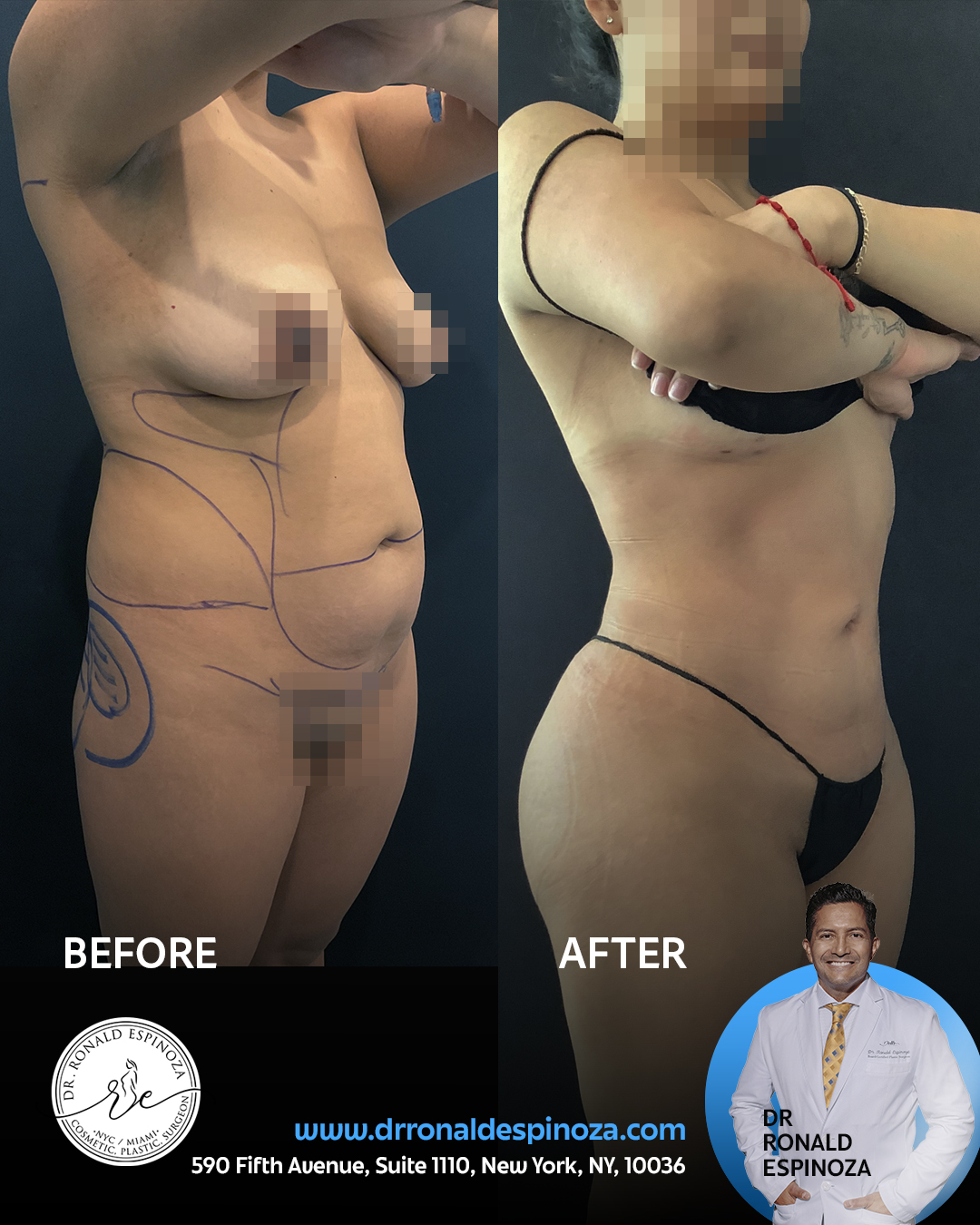
Recovering from liposuction combined with a Brazilian Butt Lift (BBL) requires careful planning, physical patience, and a thorough understanding of the body's healing cascade. Whether you reside in Manhattan, Brooklyn, or are traveling from Queens or Long Island, the first 30 days lay the essential foundation for both your comfort and your long-term aesthetic contour. For many of our bilingual patients researching recuperacion lipo con bbl, knowing precisely how each week unfolds removes uncertainty and allows you to prepare your home, schedule, and support system well before surgery day.
The Core Rules of Liposuction and BBL Healing
A BBL is a two-part procedure: unwanted fat is removed using targeted liposuction from donor areas such as the abdomen, flanks, or back, and then purified and meticulously grafted into the gluteal region. Because you are healing from both volume reduction and volume addition simultaneously, your postoperative care must balance two distinct surgical needs:
- Protecting the Grafted Fat: Newly transferred fat cells survive through neovascularization—the formation of microscopic new blood vessels. Any direct, sustained pressure on your buttocks during the first few weeks can starve these fragile cells of their blood supply, compromising fat retention.
- Managing Fluid and Swelling from Liposuction: Liposuction creates internal tissue tunnels that fill with inflammatory fluid. Specialized medical compression garments (fajas) and scheduled lymphatic drainage massages are required to clear this fluid, minimize seroma risks, and encourage the skin to contract smoothly against deeper tissue.
Preparing for BBL and Liposuction Recovery in New York City Apartments
Urban living in New York introduces unique logistical considerations that suburban patients rarely encounter. Navigating multi-story walk-ups, narrow hallways, and compact apartments requires forward-thinking preparation before your surgical date.
Arrange your living quarters so that essential items sit at waist level to prevent bending or straining. Because you cannot sit directly on your buttocks, designate comfortable recovery zones where you can lie flat on your stomach (prone) or on your sides. Many New York patients find that arranging an ergonomic workstation that allows for standing, alongside ample pillows and a specialized BBL offloading cushion for later weeks, ensures a seamless transition back to remote work.
Grocery delivery services and pre-portioned low-sodium meals should be scheduled in advance. High-sodium takeout, common across city neighborhoods, exacerbates swelling and increases tissue tension in donor sites. Staying hydrated and focusing on lean proteins, clean carbohydrates, and leafy greens supports optimal cellular regeneration.
Week 1 (Days 1 to 7): Immediate Post-Op and Peak Swelling
The first week centers on rest, wound management, and managing initial surgical drainage. Tumescent fluid used during liposuction will gently seep through small incision sites during the first 24 to 48 hours; this is expected, healthy, and helps decrease overall bruising.
What to Expect Physically
You will experience diffuse soreness across your torso, back, and donor sites, often described as similar to an intense, full-body workout. Swelling reaches its peak between days three and five. Your medical compression garment (faja stage 1) must be worn 24 hours a day, removed only for brief sponge baths or post-clearance showers.
Mobility and Sleeping
Complete bed rest is discouraged. Gentle, five-minute strolls down your apartment hallway every few hours promote healthy circulation and reduce deep vein thrombosis (DVT) risks. Sleeping must occur strictly on your stomach or sides. Under no circumstances should you sit squarely on your buttocks, even for short meals.
Week 2 (Days 8 to 14): Managing Bruising and Starting Massages
By the second week, initial surgical drainage ceases, and incision entry points begin sealing securely. While overall bruising remains visible, it typically transitions from deep purple to yellow-green shades as hemoglobin breaks down.
Lymphatic Drainage Therapy
Dr. Espinoza generally clears patients to begin professional manual lymphatic drainage (MLD) during this period. Certified massage therapists gently stimulate the lymphatic system, directing stagnant lymph fluid toward functional nodes. This step is pivotal for smoothing donor sites, preventing hard subcutaneous knots (fibrosis), and alleviating localized tightness.
Energy and Daily Tasks
Your baseline stamina will begin to rebound, although fatigue often sets in by late afternoon. Patients working sedentary, remote desk jobs often resume light typing, provided they work standing up or lying prone with supportive chest pillows. Direct pressure on the buttocks remains completely off-limits.
Week 3 (Days 15 to 21): Tissue Softening and Subtle Contours
Entering the third week, the sharpest post-surgical discomfort has subsided into a dull, manageable tightness. You will notice that donor areas feel firmer to the touch—a normal phase of internal scar remodeling.
Transitioning Compression
Depending on your individual reduction in fluid retention, you may be assessed for a Stage 2 faja during your clinical follow-up. Stage 2 garments provide more structured, targeted compression across the waistline and flanks while continuing to leave the buttocks free from flattening pressure.
Sitting with an Offloading Cushion
If medically cleared, brief periods of modified sitting can begin using an approved BBL pillow placed beneath your lower thighs. This keeps your glutes elevated and floating freely without contacting the chair. These intervals should still be kept short, ideally under 15 to 20 minutes at a time.
Week 4 (Days 22 to 30): Closing the First Month
At the 30-day milestone, the initial phase of fat grafting survival is largely determined. The transferred cells that have successfully connected to your vascular network are permanent, living adipose tissue. While residual swelling will still take several months to fully resolve, your early waist-to-hip proportions become clearly visible.
Expanding Physical Activity
You may comfortably increase your walking distances around local parks or flat neighborhood sidewalks. Strenuous weightlifting, squats, running, and high-impact cardio remain restricted until further post-op clearance. Continue wearing your designated compression garment as prescribed to guide optimal skin retraction.
Navigating New York Travel and Mobility During Lipo and BBL Healing
Getting around New York City requires strategic planning while protecting your results. For your initial follow-up visits from Brooklyn, Queens, or northern suburbs into Manhattan, skip public transit. Crowded subway platforms, sudden train stops, and steep staircase transfers pose avoidable trauma risks to fresh incisions and healing tissues.
Coordinate private car rides or taxi services where you can recline on your side or stomach across the rear seat. When riding in an upright passenger seat after the third week, ensure your BBL cushion is positioned correctly under your thighs, and avoid prolonged rides during peak gridlock traffic. By planning your city travel carefully and respecting the biological requirements of tissue healing, your first 30 days will position you for an uncomplicated, rewarding aesthetic outcome.
Schedule your consultation with Dr. Ronald Espinoza
Dr. Espinoza and his team guide you through every step, from your first consultation to full recovery.
Request a consultation · Call (212) 299-9979 · See before & after results · Financing options
Frequently asked questions
- When can I ride the New York subway after lipo and BBL surgery?
- Patients should avoid the New York City subway system for at least the first 3 to 4 weeks of recovery. The physical demands of steep stairwells, crowded cars, unexpected jostling, and sudden train movements can place unnecessary strain on healing incisions and risk direct trauma to newly transferred gluteal fat. Private car services or rides with trusted family members are strongly recommended for early follow-up appointments.
- How do I sit at work during the first 30 days of recovery?
- Direct sitting on the buttocks is strictly prohibited for the first 2 to 3 weeks to ensure the survival of the transferred fat cells. If you work at a desk, we advise using an adjustable standing desk setup or working from a prone (face-down) position on a comfortable sofa or bed. Around week 3 or 4, if cleared by Dr. Espinoza, you may use a specialized BBL offloading pillow placed beneath your upper thighs to keep the buttocks completely elevated off the seat for short intervals.
- Why is professional lymphatic massage so critical during recuperacion lipo con bbl?
- Liposuction disrupts tiny lymphatic channels and causes fluid accumulation beneath the skin. Certified manual lymphatic drainage (MLD) massages gently move this trapped fluid toward working lymph nodes, significantly reducing pain, accelerating the resolution of bruising, and preventing the development of firm internal scar tissue (fibrosis) across your abdomen, back, and waistline.
- What should I do if my New York apartment has stairs or a walk-up?
- If you live in a multi-story brownstone or walk-up apartment in Manhattan or Brooklyn, arrange for someone to assist you slowly and deliberately on your first day home. Take stairs one step at a time without rushing. Once inside, consolidate your living needs on a single floor so you can minimize climbing stairs during the first 7 to 10 days while your body is at its peak of surgical inflammation.